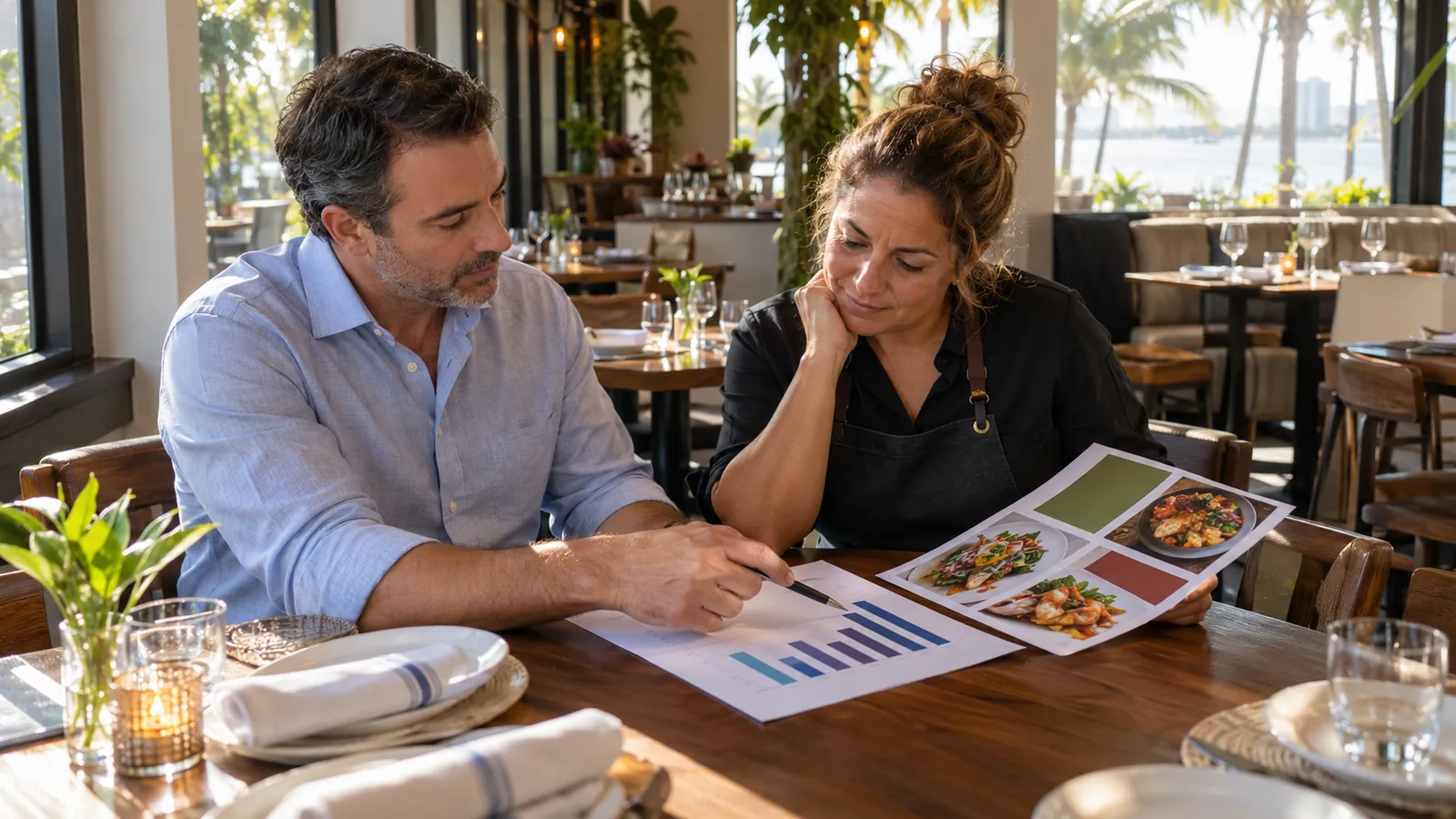
What a Buyer Checks First
- Lease terms, remaining years, rent increases and landlord attitude toward a sale
- Food, beverage and labor costs as a share of sales
- Whether the liquor license is included and what type it is
- Share of sales from dine in, delivery apps, catering and events
- Health inspection history, permits and staff turnover
The Lease Comes Before the Menu
A restaurant without a good lease has little to sell. Buyers read the term, the rent steps and the landlord's consent clause before they taste the food. See our guide on lease assignment and landlord consent.
A neighborhood with growing foot traffic and a lease with options is worth more than a famous name on a short lease.
Prime Cost Tells the Story
Buyers add food and beverage cost to labor, called prime cost, and compare it with sales. Well run places keep it near the low sixties as a percentage, though concepts vary. A rising number tells a buyer the owner is not watching.
Clean point of sale reports for two or three years are your best exhibit.
The Liquor License Is a Separate Asset
In Florida some liquor licenses are tied to a county quota and carry real value. Others are issued without a quota. A buyer needs to know which you hold and how a transfer works. Our page on the Florida liquor license transfer explains the steps.
The buyer cannot sell alcohol until the state approves the new license in their name, so timing matters.
Where Sales Come From
- Dine in sales fluctuate with season, events and weather
- Delivery apps add volume but take a large cut
- Catering and private events bring higher margins
Hurricane closures and slow summers show up in the numbers. Buyers ask for monthly sales over several years.
Cash and the Owner's Time
Restaurants take plenty of cash, and buyers hear many stories. Show how the daily count reaches the bank, using the ideas in proving cash revenue. And if you work the line six days a week, buyers will assume they must too, which lowers the price.
To see a range, ask for a private estimate.